CFA Piling Quality Control: Concrete Monitoring and Reinforcement Cage Insertion
Blogs
Blogs
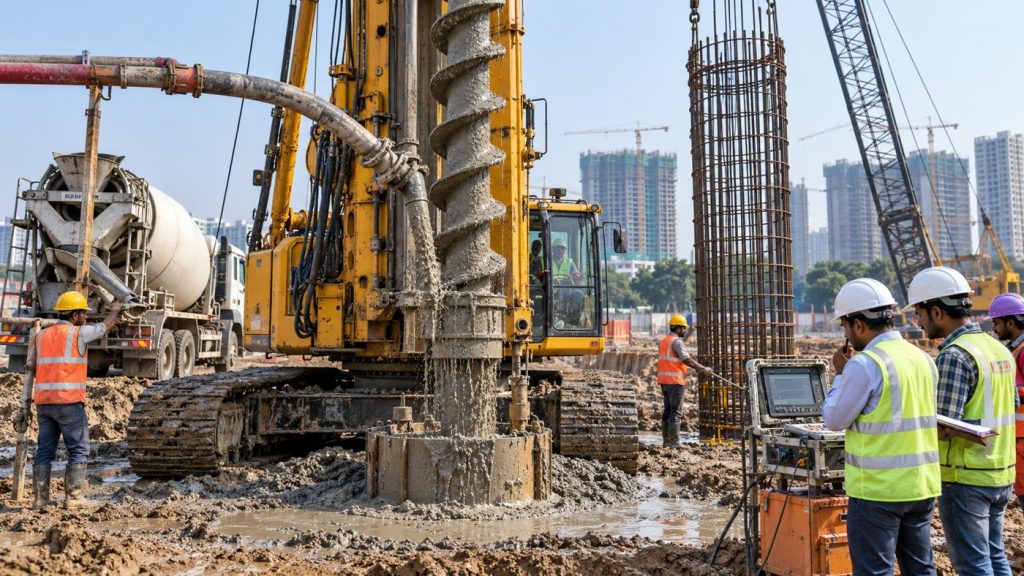
CFA piling is often selected for projects where construction speed, controlled execution and reduced site disturbance matter. But the quality of a CFA pile construction depends on more than drilling quickly. Concrete must be placed continuously as the auger is withdrawn, and the reinforcement cage must be inserted while the concrete is still workable. For reliable CFA pile construction, the site team needs to monitor the process from drilling through concreting and cage placement. This guide explains the main quality control checks and how they help reduce the risk of defects.
A Continuous Flight Auger (CFA) pile is a cast-in-situ deep foundation element. A hollow-stem auger drills to the required depth. Concrete or grout is then pumped through the hollow stem as the auger is withdrawn, filling the bore continuously. The reinforcement cage is inserted into the fresh concrete afterward.
Because the bore is not left open for long, the method can be suitable for certain ground conditions and sites where noise, vibration or spoil management are important considerations. The design and method still need to be selected according to the project’s geotechnical investigation and engineering requirements.
Unlike methods where the bore can be inspected directly before concreting, much of the CFA pile is formed below ground during a continuous operation. The crew therefore relies on equipment readings, material checks and site records to confirm that installation is proceeding as intended.
Quality control helps the team check that:
These checks support the project’s quality plan. They do not replace pile testing, design review or the inspection requirements specified by the engineer.
Before work begins, the piling team should review the approved drawings, geotechnical information and method statement. The plan should identify the pile diameter, design depth, reinforcement details, concrete requirements, sequence and any site-specific constraints.
The team should also verify:
A pre-start check helps the team identify mismatches between the design, site conditions and equipment before they affect production.
During drilling, the operator should track the pile location, verticality and depth against the project requirements. Rig instrumentation and site survey checks can help identify deviations while the pile is being installed.
The installation record should capture the designed and achieved depth, pile position, drilling time and any unusual ground conditions. If the rig encounters an unexpected obstruction, sudden change in drilling resistance or other abnormal condition, the site team should record it and follow the project’s escalation procedure.
Accurate drilling records are useful when reviewing pile performance or investigating differences between design assumptions and actual ground conditions.
Concrete quality begins before pumping. The mix should meet the approved project specification and be suitable for pumping through the CFA rig and for receiving the reinforcement cage.
Depending on the project specification, checks may include:
The concrete should be delivered and placed in a way that supports continuous installation. Delays, interruptions or a mix that is difficult to pump may complicate auger withdrawal and concrete placement.
During CFA pile concreting, concrete is pumped through the hollow auger stem as the auger is withdrawn. The site team monitors the concrete supply and the equipment readings to check that the bore is being filled continuously.
Common monitoring points include:
The expected volume is generally assessed against the designed pile dimensions, with project-specific allowances for ground conditions and installation factors. A significant difference between actual and expected volume should be investigated and recorded.
Pressure and volume readings need to be interpreted together. A single reading does not prove pile integrity, and acceptable readings do not replace the engineer’s inspection or testing requirements.
Auger withdrawal and concrete pumping must be coordinated so that the bore remains filled as the auger comes out. If the auger is withdrawn too quickly relative to concrete delivery, the concrete may not maintain the required continuity. If pumping stops or becomes irregular, the crew should follow the approved procedure and report the interruption.
The operator and pump crew should maintain clear communication throughout the operation. The pile log should note any stoppage, equipment issue, change in concrete supply or deviation from the planned installation sequence.
This coordination is a key part of CFA piling quality control because the pile shaft is formed during the same operation that removes the auger.
After concreting, the reinforcement cage is inserted into the fresh concrete to the depth and orientation required by the design. Cage installation should be planned before the pour so the lifting equipment, crew and cage are ready when needed.
Quality checks may include:
The cage should be lowered in a controlled manner while the concrete remains workable. If insertion resistance prevents the cage from reaching its specified level, the team should not force it without engineering direction. The issue should be documented and referred to the project’s responsible engineer.
A pile log provides a record of what happened during installation. It can help the project team review production, compare piles and investigate unusual results.
A typical CFA pile record may include:
| Record item | What to capture |
|---|---|
| Pile identification | Pile number and location |
| Design details | Diameter, depth and reinforcement reference |
| Drilling | Start/end time, achieved depth and observations |
| Concrete | Mix reference, delivery details and volume |
| Monitoring | Pressure, flow and auger withdrawal information, where recorded |
| Reinforcement | Cage details and achieved insertion depth |
| Exceptions | Interruptions, obstructions and corrective actions |
| Testing | Samples, test references and results when available |
Records should be completed consistently and reviewed according to the project quality plan.
The project engineer determines the inspection and testing requirements for the pile foundation. These may include concrete testing, integrity checks or load testing, depending on the design, specification and applicable standards.
The site team should confirm in advance:
Testing provides additional evidence about the installed foundation. Its scope and interpretation should follow the project specification and be handled by qualified professionals.
Some issues that may require investigation include:
The appropriate response depends on the project design and site conditions. The crew should document the issue and follow the approved procedure rather than making unapproved changes in the field.
When evaluating a contractor for CFA pile construction, ask how the team plans to manage concrete supply, monitor the installation process and record pile-by-pile data. It is also useful to understand how the contractor coordinates cage preparation and insertion with the rig and pump crew.
Consider asking:
A clear process, experienced crew and well-maintained equipment help support consistent execution across the piling scope.
CFA piling quality depends on coordinated drilling, continuous concrete placement, controlled auger withdrawal and careful reinforcement cage insertion. Monitoring concrete flow and pressure, checking actual concrete volume, recording installation details and addressing deviations promptly all contribute to a traceable construction process.
For every project, quality checks should follow the approved design, geotechnical recommendations, project specification and applicable standards. A qualified foundation contractor can help plan and execute the work to meet those project requirements.
Planning a CFA piling project? Contact GRIMTECH to discuss your site conditions, foundation requirements and project scope.
Subscribe in the footer for project highlights and technical insights from our engineers.